
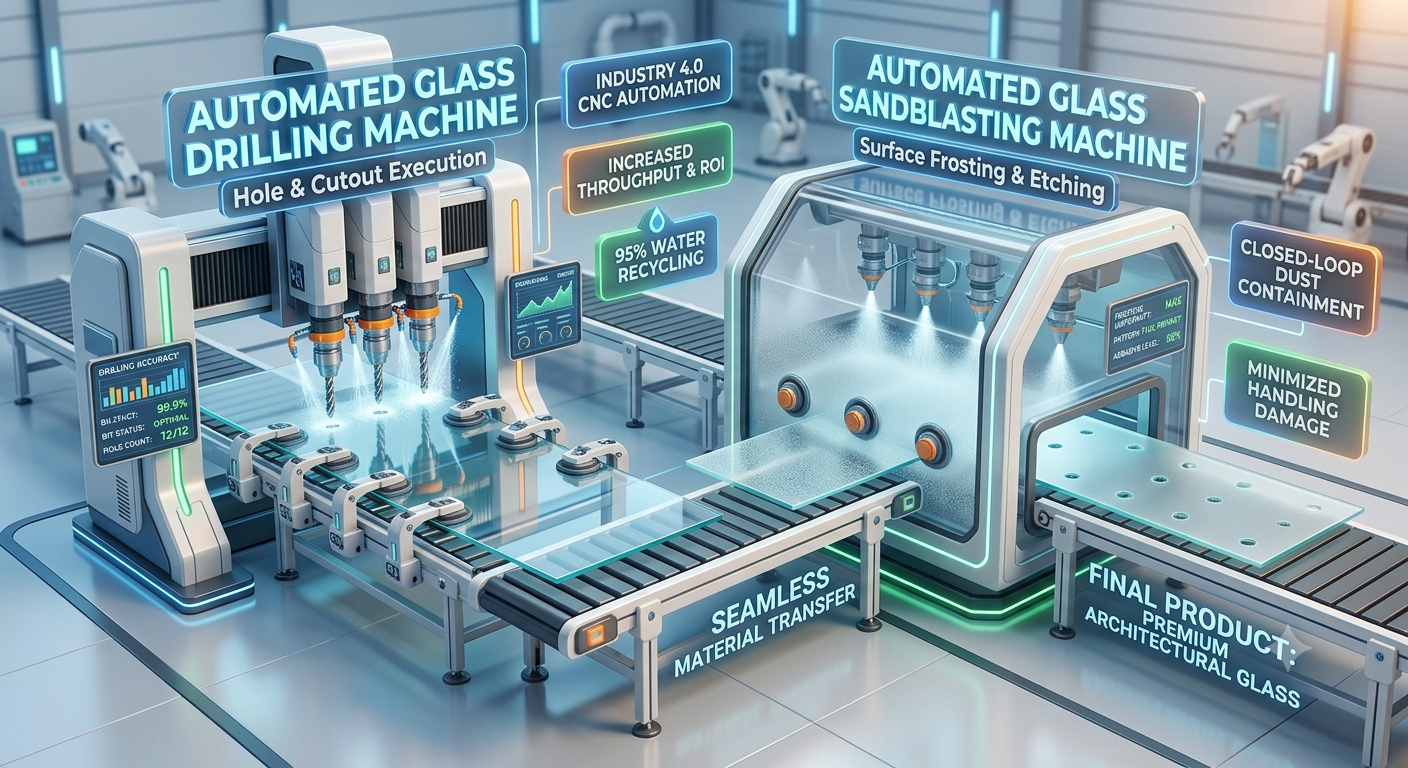
The glass manufacturing and processing industry has undergone rapid transformation with the adoption of advanced machinery such as the glass sandblasting machine and glass drilling machine. These machines are now essential in architectural glass, furniture design, automotive interiors, and decorative glass production.
From creating artistic frosted designs to precise hole drilling for fittings and hardware installation, both machines play a critical role in improving efficiency, accuracy, and finishing quality in glass fabrication units.
What is a Glass Sandblasting Machine?
A glass sandblasting machine is a specialized equipment used to etch, frost, or decorate glass surfaces by blasting abrasive material at high speed. This process creates a matte or textured finish on glass without damaging its structural integrity.
Key Applications
- Decorative glass panels
- Frosted glass doors and windows
- Branding and logo engraving
- Artistic glass designs
- Architectural interior partitions
- Customized gift items and signage
Main Features
- High-pressure air blasting system
- Adjustable abrasive flow control
- Precision nozzle for detailed designs
- Suitable for large and small glass sheets
- Uniform surface finishing
Why It Is Widely Used
- Enhances aesthetic appeal
- Provides privacy with frosted effect
- Supports custom design requirements
- Improves production efficiency
- Reduces manual engraving effort
What is a Glass Drilling Machine?
A glass drilling machine is used to create precise holes in glass sheets without cracking or damaging the surface. It is widely used in furniture manufacturing, bathroom fittings, architectural installations, and industrial glass assembly.
Key Applications
- Glass shelves and furniture assembly
- Shower enclosures
- Mirror fittings
- Glass railings
- Kitchen glass panels
- Industrial equipment glass components
Core Features
- Diamond-tipped drill bits
- Water cooling system to prevent overheating
- Adjustable speed control
- High-precision alignment system
- Stable base for vibration-free drilling
Working Principle of Glass Sandblasting Machine
The glass sandblasting machine works by propelling abrasive particles (such as silica sand or aluminum oxide) onto the glass surface at high velocity.
Process Steps
- Glass surface cleaning
- Masking for design patterns
- Abrasive blasting under controlled pressure
- Surface finishing inspection
- Final cleaning and polishing
Types of Sandblasting Effects
- Full frosting
- Partial design etching
- Deep carving effects
- Gradient texture finish
Working Principle of Glass Drilling Machine
The glass drilling machine uses a rotating diamond drill bit combined with water cooling to prevent heat buildup and cracks.
Process Steps
- Marking drill position
- Fixing glass on stable platform
- Starting low-speed drilling
- Continuous water cooling application
- Completing hole with smooth edges
Glass Sandblasting Machine vs Glass Drilling Machine
| Feature | Glass Sandblasting Machine | Glass Drilling Machine |
| Purpose | Surface finishing & design | Hole creation in glass |
| Output | Frosted or textured surface | Clean circular holes |
| Process Type | Abrasive blasting | Mechanical drilling |
| Precision Requirement | Design-based precision | High structural precision |
| Applications | Decoration, privacy glass | Fittings, installation, assembly |
Industrial Importance of Glass Processing Machines
Both glass sandblasting machine and glass drilling machine are essential in modern glass fabrication industries.
Key Industrial Benefits
- Faster production cycles
- Reduced manual labor dependency
- High precision output
- Improved product consistency
- Ability to handle bulk manufacturing
Applications Across Different Industries
Architectural Industry
- Glass facades
- Partition walls
- Decorative panels
Interior Design Industry
- Frosted glass doors
- Designer mirrors
- Custom glass furniture
Automotive Industry
- Windshield modifications
- Interior glass fittings
Commercial Sector
- Signage boards
- Branding glass panels
- Display units
Advantages of Using Glass Sandblasting Machine and Glass Drilling Machine
Key Benefits
- High accuracy and consistency
- Time-saving production process
- Customization flexibility
- Smooth and professional finishing
- Reduced material wastage
- Suitable for mass production
Maintenance Tips for Long Machine Life
Proper maintenance ensures better performance and durability.
Recommended Practices
- Clean machine after every use
- Check air pressure and compressor regularly
- Replace worn-out nozzles and drill bits
- Ensure proper lubrication of moving parts
- Maintain water cooling system efficiency
- Inspect electrical components periodically
Latest Trends in Glass Processing Technology
The glass fabrication industry is evolving with modern innovations.
Emerging Developments
- CNC-based automated sandblasting systems
- Laser-assisted glass drilling machines
- AI-controlled design precision tools
- Eco-friendly abrasive materials
- High-speed industrial production systems
Frequently Asked Questions (FAQs)
1. What is a glass sandblasting machine used for?
It is used to create frosted, textured, or decorative patterns on glass surfaces.
2. What is the purpose of a glass drilling machine?
It is used to drill precise holes in glass for fittings and installations.
3. Can both machines be used in small businesses?
Yes, they are widely used in both small workshops and large industries.
4. Does sandblasting weaken glass?
No, when done properly, it only affects the surface, not the structural strength.
5. Why is water used in glass drilling machines?
Water prevents overheating and reduces the risk of glass cracking.
6. What materials are used in sandblasting?
Common abrasives include silica sand, aluminum oxide, and glass beads.
7. Can drilling be done on tempered glass?
No, tempered glass usually cannot be drilled after processing.
8. What industries use these machines most?
Architecture, interior design, automotive, and furniture industries.
9. Are these machines automated?
Modern versions include semi-automatic and fully CNC-controlled systems.
10. How long do these machines last?
With proper maintenance, they can last many years in industrial use.