
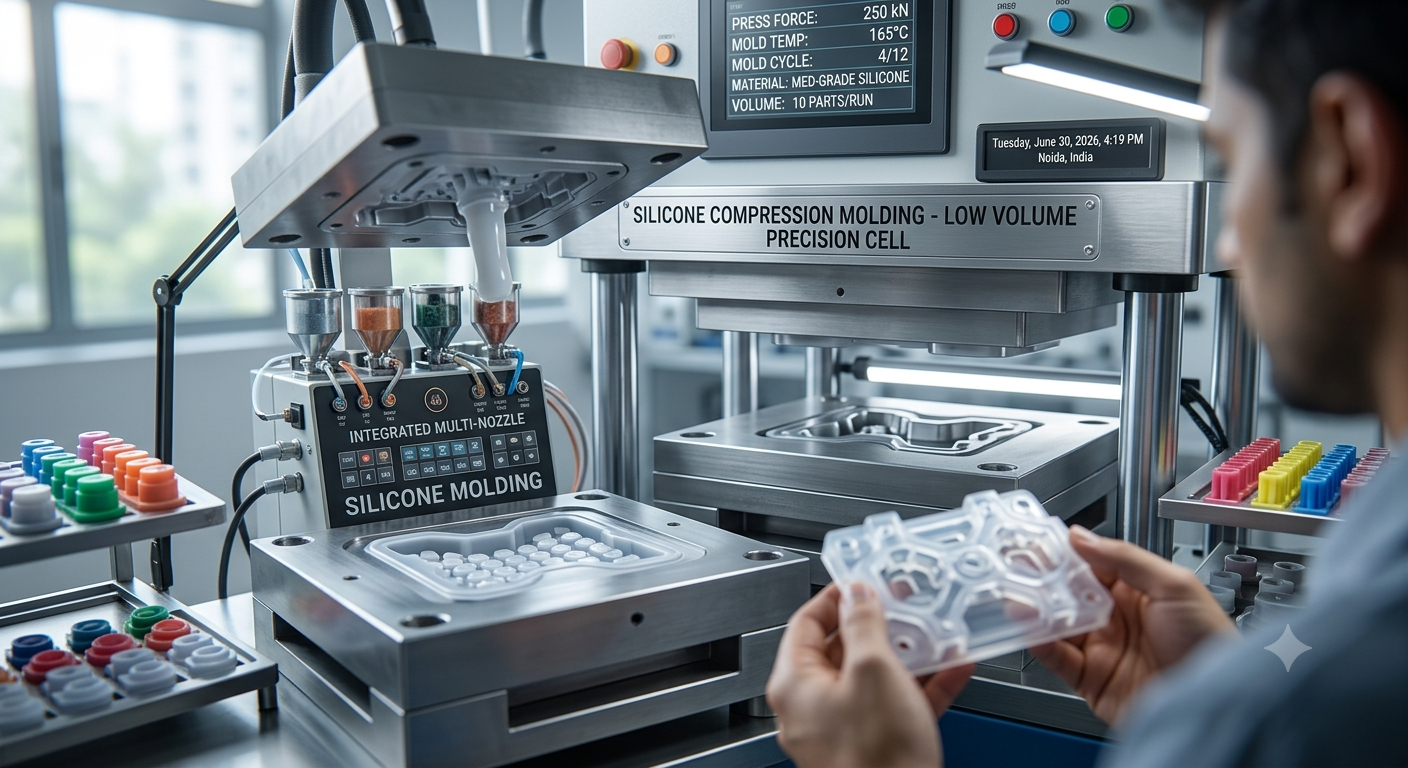
As industries demand components that combine durability, flexibility, and precision, Silicone Compression Molding has emerged as one of the most reliable manufacturing processes. From automotive and healthcare to electronics and industrial equipment, manufacturers increasingly depend on silicone molding technologies to produce high-performance components capable of withstanding demanding environments.
At the same time, the growing popularity of low volume silicone molding has created new opportunities for businesses developing prototypes, custom products, or specialized components without committing to large-scale production. This manufacturing approach allows companies to reduce investment costs while maintaining exceptional product quality.
Understanding Silicone Compression Molding
Silicone Compression Molding is a manufacturing technique in which pre-measured silicone material is placed into a heated mold cavity. Pressure is then applied to shape the material into the desired component. Once cured, the finished part is removed, trimmed, and inspected for quality.
The process is widely recognized for producing durable, flexible, and dimensionally accurate silicone products suitable for demanding industrial applications.
Key Characteristics
- High dimensional accuracy
- Excellent material consistency
- Suitable for complex component designs
- Strong resistance to heat and chemicals
- Long-lasting product performance
- Excellent sealing capabilities
What Is Low Volume Silicone Molding?
Low volume silicone molding is designed for manufacturers that require smaller production quantities without sacrificing quality or precision. Instead of producing thousands of parts, this process focuses on limited production runs for product development, testing, pilot manufacturing, or customized industrial solutions.
Many industries rely on low-volume production to validate product designs before moving into mass manufacturing.
Typical Applications
- Product prototyping
- Custom industrial components
- Medical device development
- Research and development projects
- Specialized engineering products
- Limited-edition commercial products
How Silicone Compression Molding Works
The manufacturing process follows several carefully controlled stages to ensure consistent product quality.
Step-by-Step Manufacturing Process
- Prepare the mold with the required design specifications.
- Measure and prepare the silicone material.
- Place the silicone into the mold cavity.
- Apply heat and compression pressure.
- Allow the material to cure completely.
- Remove the finished component.
- Trim excess material.
- Conduct quality inspection and testing.
- Package the finished products for delivery.
Advantages of Silicone Compression Molding
Manufacturers across multiple industries choose Silicone Compression Molding because it delivers reliable performance while supporting complex product requirements.
Major Benefits
- High precision manufacturing
- Superior mechanical strength
- Excellent thermal stability
- Outstanding chemical resistance
- Long product lifespan
- Cost-effective tooling for many applications
- Consistent production quality
- Suitable for complex geometries
Benefits of Low Volume Silicone Molding
For businesses focused on flexibility and innovation, low volume silicone molding provides significant production advantages.
Why Manufacturers Choose It
- Lower initial production costs
- Faster prototype development
- Easier product modifications
- Reduced inventory risks
- Shorter production cycles
- Ideal for customized manufacturing
- Better market testing opportunities
Industries That Use Silicone Compression Molding
The versatility of silicone makes it suitable for a wide range of industrial sectors.
Common Industries
- Automotive manufacturing
- Medical devices
- Aerospace engineering
- Consumer electronics
- Food processing equipment
- Electrical insulation
- Renewable energy
- Industrial machinery
- Laboratory equipment
Common Products Manufactured Using Silicone Compression Molding
This process supports the production of numerous high-performance silicone components.
Examples Include
- Silicone seals
- O-rings
- Gaskets
- Keypads
- Medical components
- Electrical insulators
- Protective covers
- Valve components
- Industrial bushings
- Custom molded parts
Silicone Compression Molding vs Low Volume Silicone Molding
| Feature | Silicone Compression Molding | Low Volume Silicone Molding |
| Production Quantity | Medium to High | Small Batch Production |
| Best For | Regular Manufacturing | Prototypes and Custom Orders |
| Tooling Investment | Moderate | Lower overall investment |
| Product Development | Suitable | Highly suitable |
| Manufacturing Flexibility | Good | Excellent |
| Time to Market | Standard | Faster for new products |
Factors That Influence Product Quality
Achieving consistent results depends on several manufacturing variables.
Important Quality Factors
- Silicone material grade
- Mold design accuracy
- Compression pressure
- Curing temperature
- Cycle time
- Operator expertise
- Post-production inspection
- Quality control procedures
Selecting the Right Manufacturing Partner
Choosing an experienced manufacturer plays a vital role in project success.
What to Look For
- Proven industry experience
- Modern production facilities
- Advanced quality control systems
- Material expertise
- Engineering support
- Rapid prototyping capabilities
- On-time delivery
- International quality certifications
Emerging Trends in Silicone Manufacturing
Manufacturing technologies continue to evolve to meet changing industry demands.
Current Innovations
- Automation in molding processes
- AI-assisted production monitoring
- Sustainable silicone materials
- Precision mold engineering
- Digital quality inspection
- Smart manufacturing systems
- Faster prototype development
- Eco-friendly production techniques
Frequently Asked Questions (FAQs)
1. What is Silicone Compression Molding?
It is a manufacturing process that shapes silicone material using heat and pressure inside a precision mold.
2. What is low volume silicone molding?
It refers to small-batch production used for prototypes, custom products, and limited manufacturing runs.
3. Which industries commonly use silicone compression molding?
Automotive, medical, aerospace, electronics, industrial equipment, and food processing industries.
4. Why choose low volume silicone molding?
It reduces production costs, supports rapid product development, and allows design flexibility.
5. What products can be manufactured using silicone compression molding?
Gaskets, seals, O-rings, medical components, electrical parts, and customized silicone products.
6. Is silicone resistant to high temperatures?
Yes. Silicone offers excellent heat resistance, making it suitable for demanding industrial environments.
7. How long does the compression molding process take?
Production time depends on component complexity, curing requirements, and batch size.
8. Can silicone compression molding produce complex shapes?
Yes. Proper mold design enables highly detailed and intricate component manufacturing.
9. Is low volume silicone molding suitable for product testing?
Absolutely. It is widely used for prototype validation and pilot production.
10. How do manufacturers ensure consistent quality?
Through precise mold engineering, controlled curing conditions, high-quality materials, and comprehensive inspection processes.