
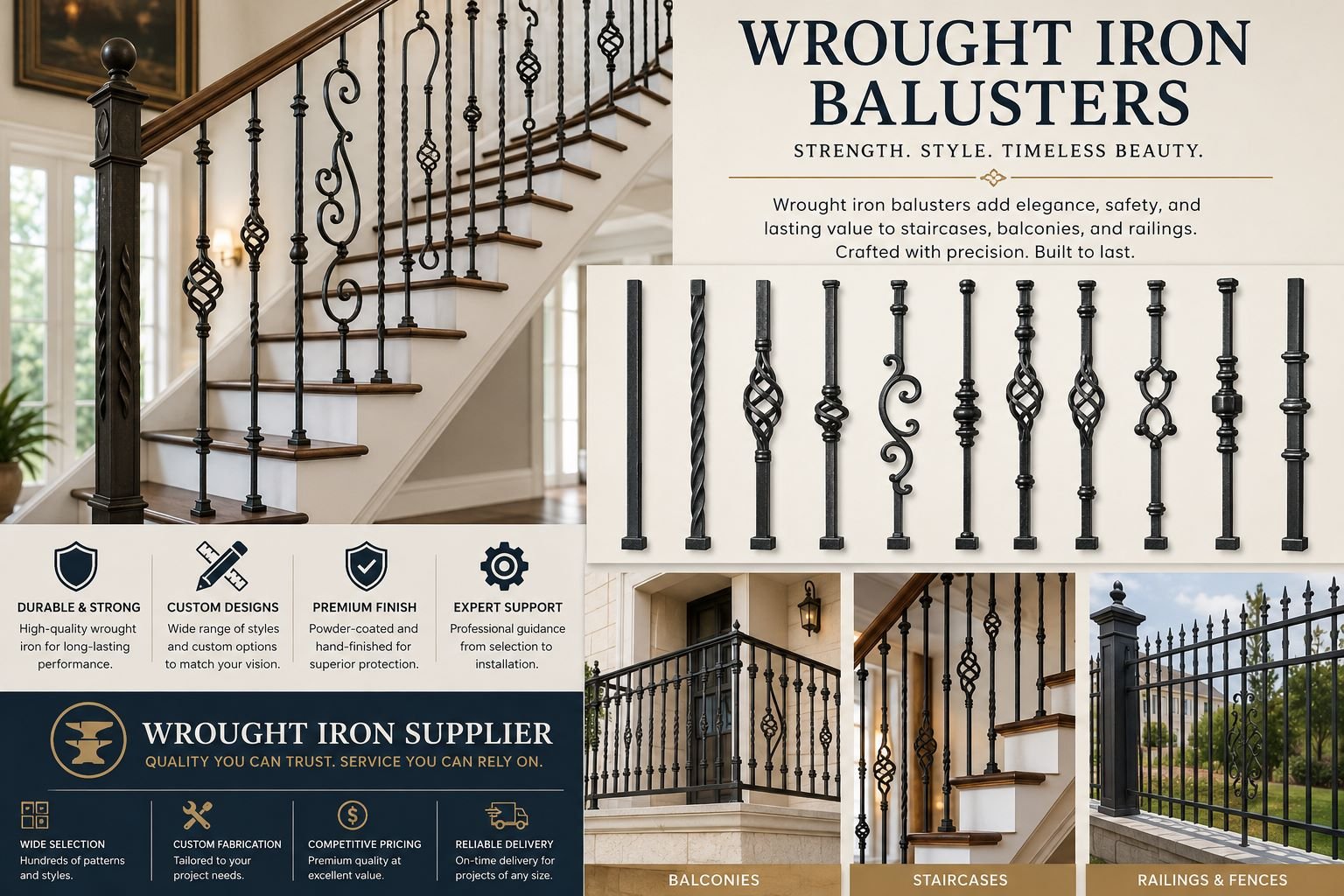
Wrought iron has long been valued in architecture because it combines strength, durability, and decorative beauty. Among its many applications, Wrought Iron Balusters are especially popular for staircases, balconies, terraces, railings, and entrance areas. Their elegant appearance can transform an ordinary architectural feature into a sophisticated design element.
However, the quality of the finished installation depends heavily on choosing the right Wrought Iron Supplier. Material thickness, manufacturing accuracy, finishing quality, corrosion protection, design consistency, and customization options can vary considerably between suppliers. Understanding these factors helps homeowners, architects, contractors, fabricators, and developers make better purchasing decisions.
What Are Wrought Iron Balusters?
Wrought Iron Balusters are vertical structural and decorative components installed between a handrail and the supporting staircase or floor structure. They are commonly used in indoor stair railings, balcony systems, exterior railings, and architectural metalwork.
Modern balusters are available in numerous designs, ranging from simple straight bars to elaborate twisted, scrolled, basket, and ornamental patterns. This versatility makes wrought iron suitable for traditional homes, luxury villas, commercial properties, hotels, restaurants, and contemporary interiors.
Apart from enhancing appearance, properly manufactured balusters contribute to railing strength and safety. Their solid construction also gives them excellent resistance to everyday impact and wear.
Why Wrought Iron Balusters Remain Popular
The continued popularity of wrought iron comes from its combination of visual appeal and practical performance.
Important benefits include:
- High strength and structural stability
- Long service life when properly protected
- Wide variety of decorative patterns
- Compatibility with wood, stone, glass, and metal
- Suitable for classic and contemporary architecture
- Customization for specific projects
- Easy integration with staircase and railing systems
Unlike many decorative materials, wrought iron can provide both structural support and artistic detail. A staircase using wood handrails with decorative iron balusters, for example, creates an attractive contrast between warm natural textures and strong metalwork.
Popular Designs for Wrought Iron Balusters
Manufacturers offer many patterns to suit different architectural styles.
Straight balusters provide a clean and minimal appearance that works well in modern spaces. Twisted balusters introduce subtle decorative movement without appearing overly traditional.
Basket designs contain a sculpted central feature and are often combined with straight bars to create visual variety. Scroll balusters feature curved ornamental shapes commonly associated with classical and European architecture.
Hammered designs provide a handcrafted appearance through textured surfaces, while geometric patterns are increasingly used in contemporary properties.
Designers often combine two or three baluster styles within the same railing system to create a balanced decorative pattern.
Choosing the Right Wrought Iron Supplier
Selecting a dependable Wrought Iron Supplier is essential for maintaining consistent product quality throughout a project. Buyers should consider more than price when comparing manufacturers or distributors.
An experienced supplier should provide accurate dimensions, suitable material grades, reliable fabrication, consistent finishes, and technical information where required.
Before ordering, evaluate:
- Manufacturing experience
- Available designs and sizes
- Material quality
- Finishing processes
- Corrosion protection
- Custom manufacturing capability
- Production capacity
- Packaging standards
- Delivery reliability
- Technical assistance
For large architectural projects, requesting product samples before placing a bulk order can help verify finishing quality and dimensional consistency.
Material Quality and Manufacturing Standards
Good Wrought Iron Balusters should have consistent dimensions and properly formed decorative details. Poor manufacturing may result in uneven patterns, rough surfaces, welding defects, or irregular sizes that make installation difficult.
Professional suppliers normally use controlled fabrication processes to ensure repeatable quality.
Important characteristics include uniform thickness, smooth edges, accurate decorative elements, strong welded joints where applicable, and surfaces prepared correctly before finishing.
Dimensional accuracy becomes especially important when hundreds of balusters are required for the same staircase, balcony, or commercial building.
Finishing and Corrosion Protection
Metal finishing has a major influence on appearance and durability.
Interior balusters may receive painted, powder-coated, antique, satin, matte, or metallic finishes. Exterior products require stronger protection because they are exposed to moisture, temperature changes, rain, and environmental contaminants.
Common protection methods include:
- Powder coating
- Protective primer
- Outdoor-grade paint
- Galvanizing
- Zinc-based coatings
- Specialized corrosion-resistant treatments
Ask your Wrought Iron Supplier whether the selected finish is recommended for indoor or outdoor installation.
Proper preparation before coating is equally important because even premium coatings may fail when applied over contaminated or poorly prepared metal surfaces.
Wrought Iron Compared With Other Baluster Materials
| Feature | Wrought Iron | Wood | Stainless Steel |
| Strength | Excellent | Moderate | Excellent |
| Decorative Options | Excellent | Very Good | Moderate |
| Traditional Appearance | Excellent | Excellent | Limited |
| Modern Applications | Very Good | Good | Excellent |
| Custom Designs | Excellent | Very Good | Good |
| Maintenance | Moderate | Moderate | Low |
| Service Life | Long | Good | Long |
The best material depends on project design, location, budget, maintenance expectations, and architectural style.
Custom Wrought Iron Solutions
Customization is one of the biggest advantages of working with a specialized Wrought Iron Supplier.
Custom products can be developed according to drawings, dimensions, architectural concepts, restoration requirements, or unique decorative themes.
Customized solutions may include special baluster heights, exclusive patterns, decorative scrolls, railing panels, gates, fence components, staircase accessories, and matching ornamental parts.
Architects working on premium residential or hospitality projects often use custom ironwork to create distinctive visual identities that standard components cannot provide.
Applications of Wrought Iron Balusters
Wrought Iron Balusters can be used across many residential and commercial environments.
Typical applications include:
- Indoor staircases
- Balcony railings
- Terrace barriers
- Luxury villas
- Hotels
- Restaurants
- Commercial buildings
- Heritage properties
- Entrance railings
- Decorative partitions
They can also be combined with marble staircases, timber handrails, metal frames, and stone architecture.
Choosing a design that complements surrounding materials creates a more coordinated and professional result.
Installation and Maintenance Tips
Accurate installation is necessary for appearance and safety. Balusters should be positioned consistently and fixed securely according to the railing design and applicable building requirements.
Before installation, confirm measurements carefully and determine the required spacing.
After installation, inspect the surface periodically. Small scratches or damaged coatings should be repaired before moisture reaches exposed metal.
For routine cleaning, mild soap, water, and a soft cloth are normally sufficient. Harsh chemicals or abrasive cleaning materials should be avoided unless recommended by the manufacturer.
Exterior installations may require occasional coating inspection depending on climate and environmental conditions.
How to Calculate Your Baluster Requirement
Measure the total railing length and determine the required spacing according to your design and local safety standards.
Your installer or supplier can then calculate the approximate quantity required.
Always consider additional pieces for cutting, fabrication adjustments, accidental damage, or future replacement. For larger projects, purchasing all balusters from the same production batch can also help maintain consistent dimensions and finishes.
FAQ About Wrought Iron Balusters and Suppliers
1. Are Wrought Iron Balusters suitable for indoor staircases?
Yes. They are widely used for indoor staircases because they provide excellent strength and decorative flexibility.
2. Can wrought iron balusters be installed outdoors?
Yes, provided they receive an appropriate corrosion-resistant coating or protective finish.
3. What styles are available?
Common options include straight, twisted, basket, scroll, hammered, geometric, and custom decorative patterns.
4. Can balusters be customized?
Yes. A professional Wrought Iron Supplier can often manufacture products according to drawings, sizes, patterns, and project requirements.
5. How long do wrought iron balusters last?
High-quality products can last for many years or decades when properly manufactured, installed, and maintained.
6. Do wrought iron balusters require maintenance?
Maintenance is generally minimal. Periodic cleaning and inspection of protective coatings are usually sufficient.
7. Can wrought iron be combined with wooden railings?
Yes. Wood handrails combined with iron balusters are among the most popular staircase design combinations.
8. How should I select a reliable supplier?
Check manufacturing experience, product quality, customization capabilities, finishing standards, delivery reliability, and previous project experience.
9. Are custom iron balusters expensive?
Costs depend on design complexity, dimensions, finish, order quantity, and fabrication requirements. Standard designs are usually more economical.
10. What information should I provide when requesting a quotation?
Provide the required design, dimensions, quantity, finish, application, delivery location, drawings if available, and whether the installation is indoors or outdoors.