
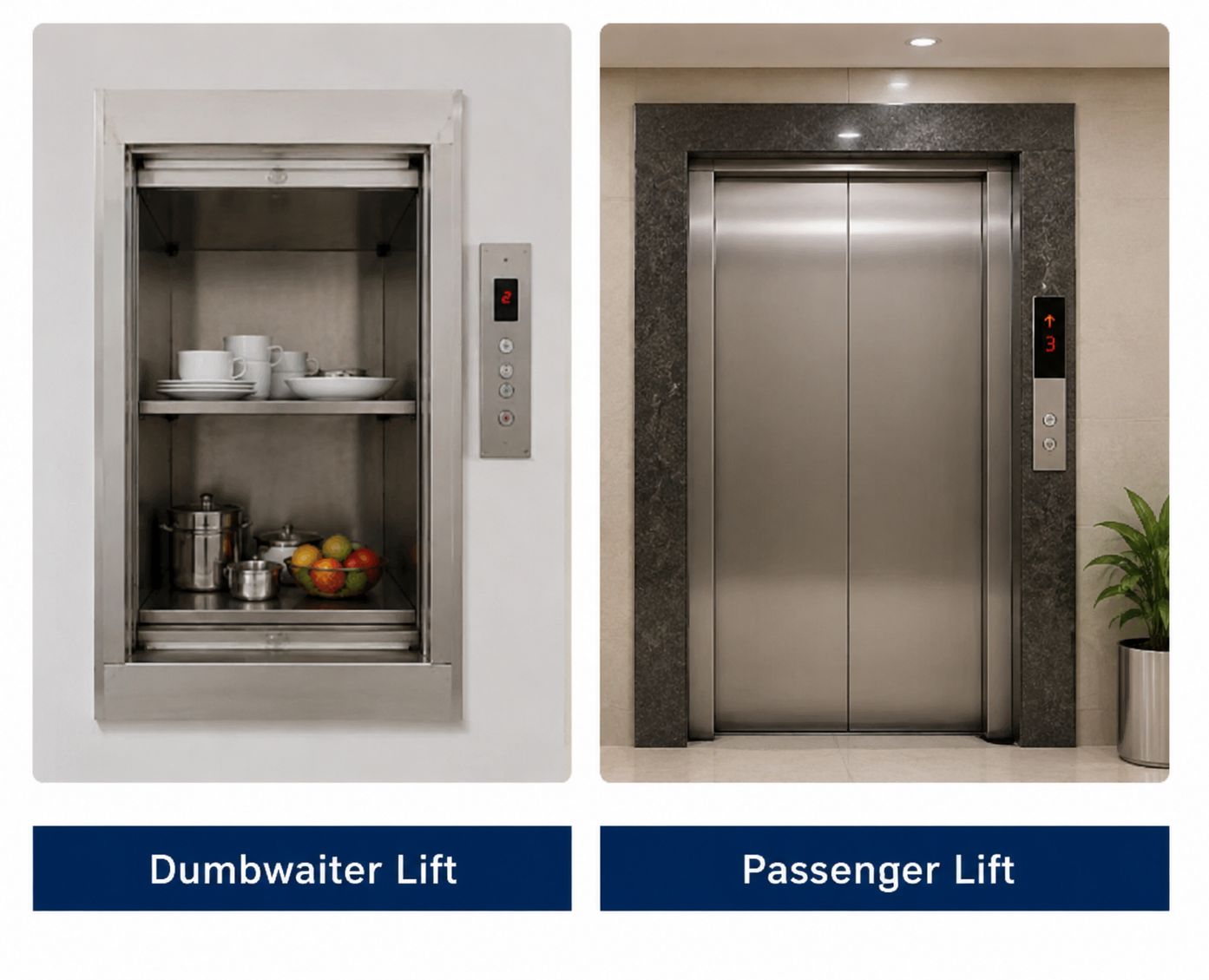
Elevators are often associated with moving people, but modern buildings need to move much more than passengers. From hot meals and clean laundry to medical supplies, laboratory materials, and warehouse inventory, businesses are increasingly looking for faster ways to transport goods between floors.
This is where the dumbwaiter lift is making a difference.
Compact, practical, and designed for material transportation, dumbwaiter lifts are helping restaurants, hotels, hospitals, laboratories, commercial properties, and residences improve the way goods move vertically.
While a passenger lift is built to transport people, a dumbwaiter lift focuses on a different challenge: moving suitable goods between floors without unnecessary manual handling.
The concept may be simple, but its impact on daily operations can be significant.
The Hidden Problem Inside Multi-Storey Buildings
A multi-level building can look highly efficient from the outside.
But behind the scenes, moving items between floors can become a daily headache.
A restaurant needs to move meals from the kitchen.
A hotel needs to transport supplies.
A hospital needs to distribute materials.
A warehouse needs to move products between storage levels.
Without a dedicated system, employees may rely on stairs, carts, or other internal routes. This can consume valuable time, increase physical workload, and create unnecessary movement through busy areas.
A dumbwaiter lift offers another option.
Instead of sending people up and down with every load, the building can use a dedicated vertical transportation system designed specifically for suitable goods.
The Small Lift With a Big Job
A dumbwaiter is essentially a compact goods lift designed for transporting materials rather than passengers.
Its cabin is generally smaller than that of a passenger lift, allowing the system to fit into spaces where a full-size elevator may not be practical.
Depending on the application, the lift may be used to move:
- Prepared food
- Dishes and kitchen supplies
- Laundry
- Packaged goods
- Documents
- Retail inventory
- Medical supplies
- Laboratory materials
- Household items
The exact capacity, dimensions, speed, door arrangement, and safety features should always be selected according to the building, intended use, and applicable regulations.
The key idea is straightforward:
If people don’t need to travel with the load, a dedicated goods lift may be the smarter solution.
Dumbwaiter Lift vs. Passenger Lift: Two Different Missions
A common misconception is that a dumbwaiter is simply a miniature passenger elevator.
That’s not the right way to look at it.
A passenger lift is designed around human transportation. Its cabin, controls, doors, safety systems, and operating requirements are intended to protect and accommodate passengers.
A dumbwaiter lift is designed around material movement.
The difference can be summarized in one sentence:
Passenger lifts move people. Dumbwaiter lifts move goods.
This distinction allows building owners to select a transportation solution based on the actual workflow of the property.
| Application | Suitable Lift Focus |
| Moving employees between floors | Passenger lift |
| Transporting customers in a hotel | Passenger lift |
| Moving meals between kitchen and dining areas | Dumbwaiter lift |
| Transporting small supplies between floors | Dumbwaiter lift |
| Moving heavy industrial cargo | Freight or goods lift |
| Moving household items in a multi-storey residence | Dumbwaiter lift, where permitted |
The smartest buildings don’t necessarily depend on one elevator for everything.
They use the right system for the right task.
Restaurants Discover the Power of Vertical Delivery
Few industries understand the importance of speed better than food service.
During a busy lunch or dinner shift, every minute matters.
If a restaurant operates across several floors, staff may need to transport food, dishes, beverages, and supplies between different levels.
Every trip takes time.
Every extra trip adds physical effort.
And every delay can affect customer service.
A dumbwaiter lift can act as a dedicated vertical delivery route for suitable materials.
The kitchen prepares the food.
The lift moves it.
The service team receives it.
The process can be faster and more organized than relying entirely on manual carrying.
For restaurants and hotels, this can turn an overlooked vertical space into a valuable operational advantage.
Hospitals Need Smarter Material Movement
Hospitals are another environment where efficient logistics matter.
Medical facilities may need to move supplies, clean laundry, equipment, and other materials across different floors.
At the same time, hospitals must carefully manage movement through patient and public areas.
A dedicated goods transportation system can support more organized internal logistics.
In some facilities, different transportation routes may be used for clean and soiled materials as part of broader infection-control procedures.
The exact design depends on hospital protocols, building configuration, and regulatory requirements, but the goal remains the same:
Move essential materials efficiently without creating unnecessary disruption.
Laboratories: Where Controlled Movement Matters
Laboratories often handle materials that require careful transportation.
Samples and research materials may need to travel from collection areas to testing departments or between different floors.
A suitable dumbwaiter lift can provide an enclosed transportation route for approved materials.
However, specialized applications require careful planning.
Factors such as vibration, cleaning, containment, temperature, access control, and material compatibility may need to be considered.
For laboratories, the best lift is not necessarily the fastest one.
It’s the one designed around the specific material and workflow.
Warehouses Are Turning Vertical
As businesses search for more efficient ways to use available space, multi-level storage and mezzanine areas are becoming increasingly important.
But vertical storage creates a challenge:
How do you move products between levels efficiently?
For suitable loads, a dumbwaiter lift can help bridge the gap between floors.
Retail stockrooms, commercial warehouses, and distribution facilities may use compact goods lifts to transfer smaller products and materials between designated levels.
This can help reduce unnecessary stair movement and support smoother internal logistics.
For larger or heavier loads, however, a dedicated freight or goods lift may be more appropriate.
The right solution depends on load size, frequency of use, travel distance, and operational requirements.
The Technical Side: What Should Buyers Consider?
Choosing a dumbwaiter isn’t simply about selecting a cabin and installing it.
The system should be designed around the building.
Key considerations include:
Capacity
The lift should safely accommodate the maximum expected load.
A common mistake is choosing capacity based only on average usage. The heaviest realistic load should be considered when specifying the system.
Speed
Speed affects productivity, but faster isn’t always better.
The ideal speed depends on the number of floors, frequency of operation, and the building’s workflow.
Cabin Dimensions
The cabin must accommodate the size and shape of the items being transported while fitting within the available shaft and structural space.
Door Design
Door configuration can influence loading convenience, space requirements, and safety.
Horizontal sliding doors are common in many applications, but the final selection should be based on the specific system design and applicable requirements.
Drive Technology
The lifting mechanism should be selected according to factors such as capacity, travel height, performance, maintenance, and installation conditions.
Safety and Compliance
Even though dumbwaiters are intended for goods rather than passengers, safety remains critical.
The system must be designed, installed, operated, and maintained according to applicable local regulations and standards.
The Biggest Advantage? Less Unnecessary Movement
The real value of a dumbwaiter lift isn’t just its ability to move products.
It’s the time it can save.
Consider a restaurant employee who normally makes 30 trips between floors during a shift.
Now imagine reducing many of those trips through a dedicated goods lift.
The benefit isn’t simply faster transportation.
It can mean:
Less walking.
Less manual carrying.
More efficient staff deployment.
Better workflow.
Faster service.
That’s why a relatively small lift can have a surprisingly large effect on building operations.
The Future Is Not One Lift—It’s the Right Combination
The modern building may not need one elevator to do everything.
Instead, it may use several transportation systems designed for specific purposes.
A passenger lift moves people.
A dumbwaiter lift moves smaller goods.
A freight elevator handles heavier loads.
Service lifts support operational activities.
Automated systems may eventually handle specialized logistics.
This creates a more efficient ecosystem where people and materials can move through the building without competing for the same transportation infrastructure.
Why Businesses Are Looking Beyond Traditional Elevators
The demand for smarter vertical transportation is being driven by several trends.
Buildings are becoming more complex.
Urban spaces are becoming denser.
Businesses are operating across multiple levels.
Labor efficiency is becoming increasingly important.
And organizations are looking for ways to reduce unnecessary manual handling.
These pressures are encouraging property owners to rethink how materials move inside their buildings.
A dumbwaiter lift may not be the right solution for every application, but where the load is suitable, it can offer a practical way to improve vertical logistics without investing in a full-scale passenger transportation system.
https://newsgrow.blogspot.com/2026/07/why-moving-walkway-systems-and-quality.html
https://newsgrow.blogspot.com/2026/07/dumbwaiter-lift-vs-passenger-lift-small.html