
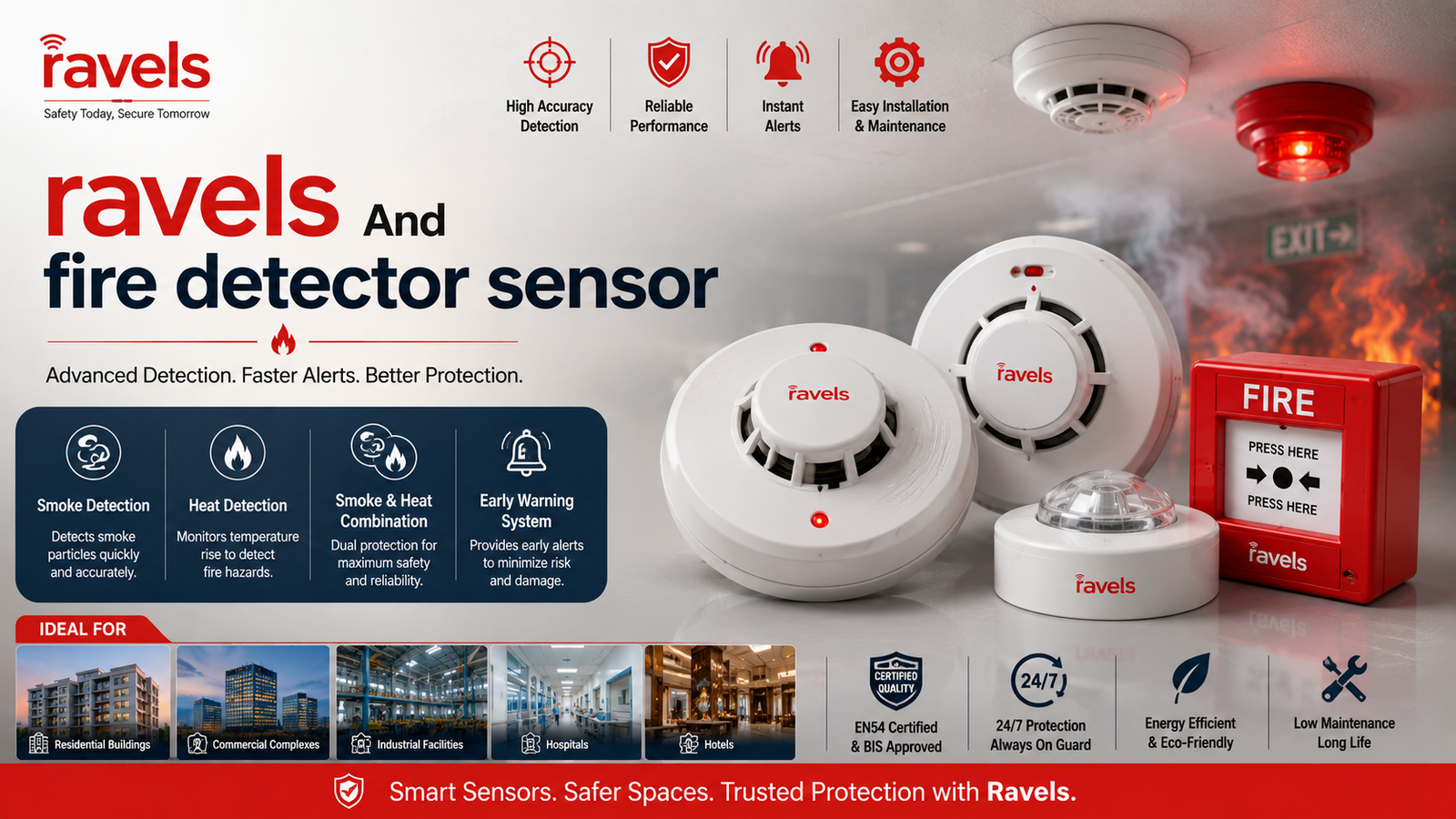
Fire safety is not simply a compliance requirement. For commercial buildings, factories, hospitals, hotels, warehouses, educational institutions and residential developments, it is also a financial and operational consideration. A properly planned detection system can help identify signs of fire at an early stage, support faster emergency action and reduce the potential impact of an incident.
This is where Ravels and the selection of an appropriate fire detector sensor become relevant. Rather than viewing detectors as isolated devices, building owners and facility teams should consider how detection, alarm notification, control equipment and maintenance work together as one fire safety system.
What Is a Fire Detector Sensor?
A fire detector sensor is a device designed to identify physical or environmental changes that may indicate a developing fire. Depending on the detector type, it may respond to smoke particles, rising temperature, flames or a combination of conditions.
When a detector recognises conditions that meet its programmed criteria, it communicates with the associated fire alarm system so that appropriate alerts or actions can be initiated.
In simple terms:
A fire detector sensor detects potential signs of fire and helps the fire alarm system provide an early warning to building occupants and responsible personnel.
Detection technology should always be selected according to the environment, expected fire risks, applicable regulations and overall fire safety design.
Understanding Ravels in Modern Fire Detection
For buyers searching for Ravels, the important question should not be limited to finding a particular product. It should also include whether the selected fire detection equipment is appropriate for the intended application.
Different buildings have different operating conditions. An office may have very different detection requirements from a manufacturing unit, warehouse, hospital or hotel.
A suitable fire detection solution therefore requires consideration of:
- Building type and occupancy
- Potential sources of fire
- Ceiling height and room layout
- Dust, steam and environmental conditions
- Required alarm coverage
- Fire alarm panel compatibility
- Inspection and maintenance requirements
- Applicable fire and electrical standards
This application-focused approach can help organisations make better purchasing decisions rather than selecting equipment purely on price.
How Does a Fire Detector Sensor Work?
The operating principle depends on the type of detector installed.
Smoke Detection
Smoke detectors are designed to identify smoke particles generated during combustion. When smoke reaches the sensing chamber and crosses the detector’s response threshold, the device can trigger an alarm signal through the connected system.
Smoke detection is commonly considered for offices, corridors, commercial premises and other areas where early identification of smoke is important.
Heat Detection
A heat detector responds to temperature conditions rather than directly detecting smoke.
Depending on its design, it may respond when:
- Temperature reaches a defined level.
- Temperature rises unusually quickly.
- A specified combination of temperature conditions occurs.
Heat detection may be appropriate for environments where smoke detectors could experience nuisance alarms because of normal operational conditions.
Multi-Criteria Detection
Some applications use detectors capable of analysing more than one fire-related condition. Combining different sensing inputs can improve decision-making in environments where a single detection method may not be sufficient.
The correct detector still depends on the application. More sensing technology does not automatically mean that a detector is suitable for every location.
Why Detector Selection Matters
One of the most common mistakes in fire alarm planning is assuming that the same detector can be installed throughout an entire building.
Consider a property containing an office, electrical room, warehouse, pantry and production area. Each space can have different environmental conditions and fire risks.
A detector suitable for a clean office environment may not be the best choice for an area regularly exposed to dust, vapour or temperature fluctuations.
Before selecting a fire detector sensor, consider three questions:
What Could Start a Fire?
Identify electrical equipment, combustible materials, machinery, heating equipment and other potential ignition sources.
What Are the Normal Environmental Conditions?
Dust, humidity, steam, airflow and temperature changes can influence detector performance.
What Type of Warning Is Required?
The required detection speed, alarm strategy and integration with the overall fire alarm system should be established during system design.
Professional fire safety assessment is particularly important for complex or higher-risk facilities.
Financial Impact of Fire Detection
The financial value of fire detection extends beyond the purchase price of individual devices.
A serious fire can create several categories of loss simultaneously, including damage to property, equipment and stock as well as business interruption.
Potential costs can include:
- Repair and reconstruction
- Machinery replacement
- Inventory losses
- Temporary relocation
- Operational downtime
- Data or document loss
- Contractual disruption
- Investigation and recovery expenses
No detector can guarantee that these losses will be prevented. However, early detection is an important component of a broader fire protection strategy because faster awareness can support faster response.
Initial Price vs Total Cost of Ownership
Businesses purchasing fire detection equipment should consider lifecycle cost rather than comparing only unit prices.
| Cost Area | What to Evaluate |
| Initial purchase | Detector, panel and accessory costs |
| Installation | Cabling, mounting and commissioning |
| Compatibility | Integration with the selected alarm system |
| Testing | Periodic inspection and functional testing |
| Maintenance | Cleaning, servicing and replacement requirements |
| Expansion | Ability to accommodate future building changes |
| Downtime | Operational impact during servicing or faults |
A lower initial price can become less attractive if equipment requires frequent replacement, is unsuitable for the environment or creates compatibility problems.
Conventional and Addressable Fire Detection
Another important consideration when evaluating Ravels fire safety equipment is the overall system architecture.
Conventional Systems
Conventional fire alarm systems typically divide a building into detection zones. When an alarm occurs, the panel identifies the affected zone rather than necessarily identifying an individual detector.
These systems may suit certain smaller or relatively straightforward installations.
Addressable Systems
An addressable fire alarm system allows individual devices to have unique identities within the system. This can provide more precise information about where an alarm or fault has originated.
For larger or more complex buildings, this level of identification can support faster investigation and maintenance.
System selection should be based on building requirements rather than assuming that one architecture is universally better.
Applications for Fire Detection Systems
A fire detector sensor can form part of fire protection strategies across many types of premises.
Commercial Buildings
Offices, retail properties and business centres require dependable detection to protect occupants, equipment and day-to-day operations.
Industrial Facilities
Factories and production environments may contain machinery, electrical systems, raw materials and processes that require carefully selected detection technologies.
Warehouses
Storage configuration, ceiling height, stock type and building dimensions can influence detector selection and placement.
Hospitals and Healthcare Facilities
Healthcare environments require carefully designed alarm strategies because evacuation and emergency response can be more complex.
Hotels and Hospitality Properties
Guest rooms, corridors, kitchens, service areas and plant rooms can present different detection requirements within the same property.
Educational Institutions
Schools, colleges and training centres need fire detection strategies appropriate to their occupancy, layout and evacuation procedures.
Reducing False and Unwanted Alarms
Reliable fire detection is not only about recognising genuine fire conditions. System design should also consider environmental factors that may contribute to unwanted alarms.
Potential sources include:
- Cooking fumes
- Steam
- Construction dust
- Aerosols
- Heavy airborne particles
- Incorrect detector placement
- Poor maintenance
Repeated unwanted alarms can disrupt operations and may reduce confidence in the alarm system.
The solution should not be to reduce fire protection indiscriminately. Instead, the detector type, positioning, environmental conditions and system configuration should be professionally reviewed.
Maintenance Is as Important as Installation
Even correctly specified fire detection equipment requires ongoing inspection and maintenance.
Dust accumulation, physical damage, changes to room layouts and ageing components can affect system performance.
A maintenance programme should consider detector testing, cleaning, panel checks, alarm notification devices, batteries and other system components according to manufacturer guidance and applicable requirements.
Businesses should also maintain appropriate service records so that inspections, faults, repairs and replacements can be tracked.
Questions to Ask Before Buying Ravels Fire Detection Equipment
Before requesting a quotation, prepare information about your building and application. This helps suppliers or fire safety professionals recommend a more appropriate solution.
Ask:
- Which detector technology suits the intended environment?
- Is the detector compatible with the existing or proposed fire alarm panel?
- Is a conventional or addressable system required?
- What additional bases, modules or accessories are needed?
- What testing and maintenance procedures apply?
- Is the solution suitable for future system expansion?
- What installation and commissioning support is required?
- Which applicable standards or approvals need to be considered?
These questions are particularly valuable when comparing different fire alarm proposals.
Internal Linking Opportunities
For a fire safety or electrical solutions website, this article can naturally connect visitors with more specific resources.
Suggested internal-link anchors include:
- fire alarm systems
- addressable fire alarm system
- conventional fire alarm system
- smoke detector
- heat detector
- fire alarm control panel
- fire safety solutions
- fire alarm installation
- fire detection system maintenance
Where possible, link these phrases to genuinely useful product, service or educational pages rather than adding links purely for SEO.
Choosing the Right Fire Detection Solution
Purchasing decisions should begin with the application rather than the product catalogue.
For example, a facility manager upgrading an existing building should first document the current alarm panel, detector locations, building layout and recurring alarm issues. A professional can then assess whether existing devices remain appropriate or whether detector types, positioning or system architecture should change.
For a new development, detection requirements should be considered during the fire alarm design stage rather than after electrical work has already been completed.
This approach can reduce avoidable compatibility and installation problems.
Frequently Asked Questions
What is a fire detector sensor?
A fire detector sensor identifies conditions associated with fire, such as smoke or abnormal heat, and communicates with a fire alarm system.
What is Ravels used for?
People searching for Ravels in a fire safety context are generally looking for fire detection, alarm or related safety equipment for residential, commercial or industrial applications.
Which fire detector is best?
There is no single detector that is best for every environment. Selection depends on fire risks, environmental conditions, building design and system requirements.
What is the difference between a smoke detector and heat detector?
A smoke detector responds to smoke particles, while a heat detector responds to predefined temperature conditions or temperature changes.
Can I replace an existing detector with another model?
Not automatically. Compatibility with the fire alarm panel, detector base and overall system must be confirmed before replacement.
Where should fire detectors be installed?
Detector positioning depends on building layout, fire risk, detector technology and applicable fire safety requirements. Professional system design is recommended.
Are fire detectors suitable for warehouses?
Yes, but warehouse height, airflow, storage arrangement, materials and environmental conditions need to be considered when selecting detection technology.
How often should fire detectors be maintained?
Inspection and maintenance intervals should follow applicable regulations, system requirements and manufacturer recommendations.
Can dust affect a fire detector sensor?
Yes. Certain detection technologies can be affected by dust or contamination, making correct selection, installation and maintenance important.
Is an addressable system better than a conventional system?
Addressable systems provide individual device identification, while conventional systems generally indicate alarm zones. The appropriate choice depends on the installation.
How can businesses reduce fire alarm costs?
Focus on correct system design, compatible equipment, appropriate detector selection and planned maintenance rather than simply choosing the lowest-priced devices.
Where can I enquire about Ravels fire detection products?
Contact an authorised fire safety supplier or system professional with your required product, quantity, building type and existing panel information to obtain an appropriate recommendation and quotation.
Read more – https://newsgrow.blogspot.com/2026/08/beam-detector-fire-alarm-protecting.html