
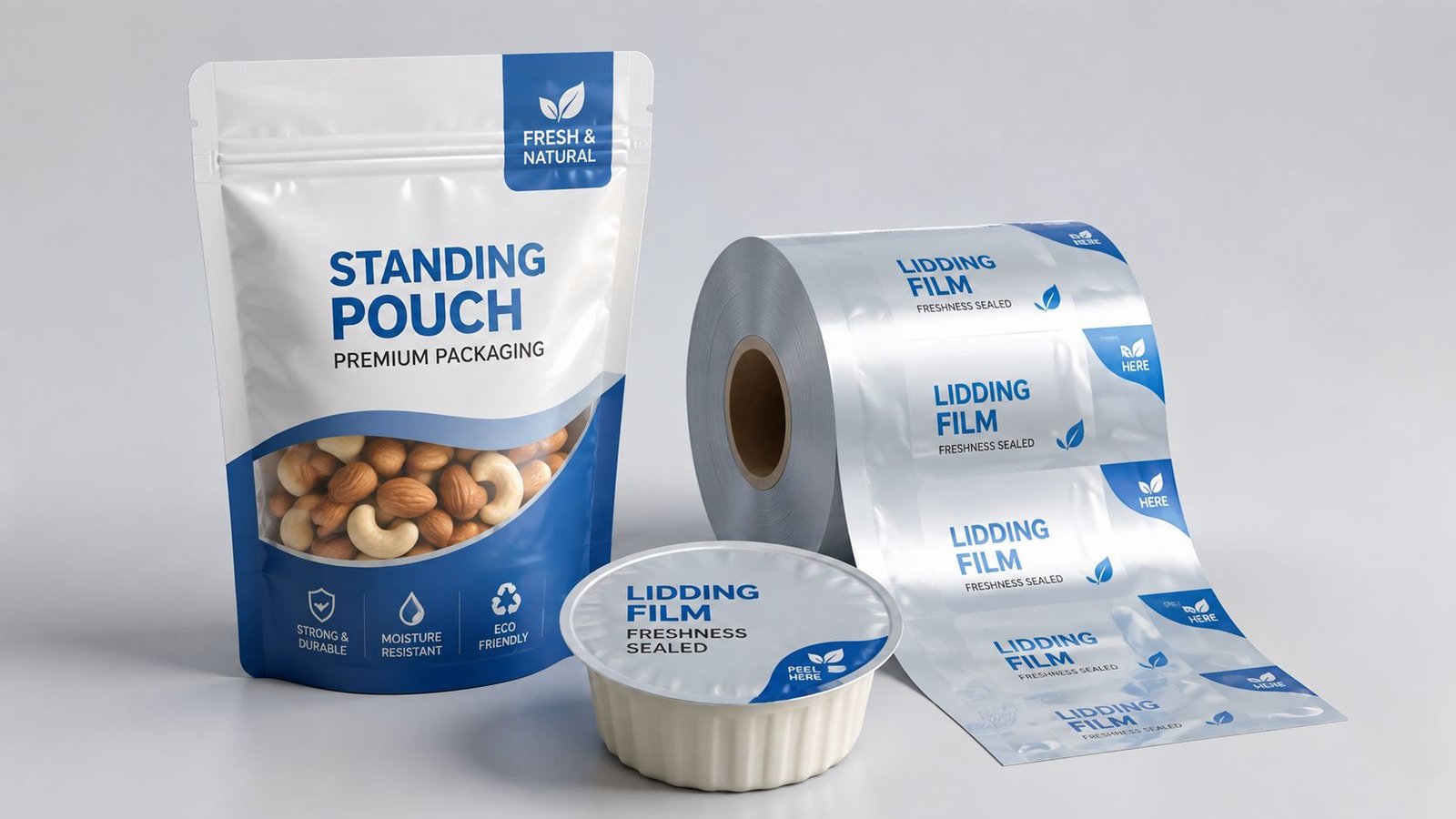
It affects shelf appeal, freshness, convenience, transport efficiency, and how customers perceive a brand. Two versatile flexible packaging solutions are the standing pouch and Lidding Film. Both are widely used across food, beverage, personal care, healthcare, pet food, and household categories.
The right packaging structure can reduce waste, protect products, and improve consumer experience. Understanding these solutions helps when selecting materials, barriers, sealing systems, and printing.
Why Flexible Packaging Matters
Consumers expect packaging to be lightweight, easy to store, simple to open, and convenient to carry. Brands also need efficient filling, sealing, shipping, and display.
A standing pouch meets these expectations by providing a flexible pack that stands upright on a shelf. Lidding Film seals trays, cups, tubs, and containers while protecting the product inside.
Key advantages include:
- Lower material use than many rigid formats
- Reduced shipping weight and storage space
- Strong branding and print quality
- Barrier options for moisture, oxygen, aroma, and light
- Features such as zippers, spouts, tear notches, and peelable seals
What Is a Standing Pouch?
A standing pouch is a flexible package with a bottom gusset that allows it to stand upright when filled. It is usually made from laminated films chosen according to product protection, strength, and sealing requirements.
Common Standing Pouch Features
Popular options include resealable zippers, tear notches, spouts, caps, hang holes, transparent windows, matte finishes, glossy finishes, foil barriers, and laser scoring. These features help brands combine usability with attractive shelf presentation.
Typical Applications
Standing pouches are used for snacks, coffee, dried fruit, spices, grains, pet treats, powders, supplements, sauces, detergents, and refill products. Spouted pouches are also suitable for beverages, purees, liquid cleaners, and personal-care products.
What Is Lidding Film?
Lidding Film is a flexible sealing material placed over the opening of a rigid or semi-rigid container. Heat, pressure, or another sealing process creates a secure closure between the film and container rim.
It protects contents from contamination, leakage, moisture, oxygen, and handling damage. Depending on the application, it may offer easy peeling, permanent sealing, anti-fog performance, freezer resistance, or microwave suitability.
Standing Pouch vs Lidding Film
| Factor | Standing Pouch | Lidding Film |
| Format | Complete flexible pack | Sealing layer for container |
| Display | Stands independently | Depends on tray or cup |
| Reclosure | Zipper or spout possible | Usually peel-and-use |
| Strength | Portability and branding | Secure container sealing |
| Uses | Dry, liquid, powder products | Fresh and prepared products |
Neither format is universally better. Selection depends on product type, filling process, required shelf life, consumer usage, and distribution conditions.
Material and Barrier Considerations
Packaging performance depends heavily on material selection. Moisture-sensitive products may need a strong moisture barrier, while coffee, spices, or powders may also require oxygen and aroma protection.
When specifying a standing pouch or Lidding Film, evaluate:
- Product composition
- Expected shelf life
- Filling temperature
- Storage conditions
- Oxygen and moisture sensitivity
- Seal strength
- Printing requirements
- Recycling goals
Testing the final structure with the actual product is better than relying only on general specifications.
Printing and Brand Presentation
Flexible packaging offers valuable branding space. Rotogravure, flexographic, and digital printing can support graphics, QR codes, instructions, claims, and regulatory information.
For a standing pouch, front and back panels create a strong billboard effect. With Lidding Film, the top of the container becomes a useful communication area for logos, flavor identification, nutrition messaging, promotions, and tamper evidence.
Sustainability and Packaging Efficiency
Sustainability should consider the complete packaging system. Lightweight structures can reduce material and freight weight, while recyclability depends on local collection systems and material combinations.
Brands can improve efficiency by reducing unnecessary layers, exploring mono-material structures, right-sizing packs, and improving seal reliability.
The best solution protects the product effectively while using materials responsibly.
How to Choose a Packaging Supplier
Ask for material specifications, barrier data, samples, print proofs, sealing recommendations, minimum order quantities, lead times, and testing procedures.
For Lidding Film, confirm container compatibility and seal-window requirements. For a standing pouch, verify drop resistance, zipper performance, puncture strength, and filling-machine suitability.
Frequently Asked Questions
1. What is the main benefit of a standing pouch?
It combines low weight, strong shelf presentation, efficient storage, and optional features such as zippers or spouts.
2. Can standing pouches hold liquids?
Yes. Properly engineered pouches can hold sauces, beverages, oils, cleaners, and other liquids.
3. What does Lidding Film seal to?
It can seal to compatible trays, cups, tubs, and containers made from PET, PP, PE, aluminum, or coated board.
4. Is Lidding Film always peelable?
No. Some structures are easy-peel, while others are designed for stronger permanent seals.
5. Can these formats improve shelf life?
Yes, when materials provide the oxygen, moisture, light, and aroma barriers required by the product.
6. Can a pouch have a transparent window?
Yes. Many pouch structures can include clear windows while retaining printed branding areas.
7. What is anti-fog Lidding Film?
It is designed to reduce condensation that can obstruct product visibility in refrigerated packaging.
8. Can both formats be custom printed?
Yes. Both can carry branding, product information, regulatory details, and promotional graphics.
9. Why is seal testing important?
Poor seals can cause leakage, contamination, shorter shelf life, and customer complaints.
10. Which format is better for food?
The better choice depends on food type, filling method, storage temperature, shelf-life target, and consumer use.